How a Doula Can Help with Information Overload & Decision Fatigue
Or, How to figure out who to trust/where to get your information.
Are you feeling like you don’t know where to start with preparing for birth? Feeling like there’s so much info out there, you don’t know who or what to trust?
One of the hard parts of being pregnant is dealing with the fact that you don’t know what you don’t know. How are you supposed to research your options if you don’t know what’s important?
While I love that people no longer have to rely solely on the somewhat crappy book “What to Expect When Expecting” (though that title is truly excellent), I think that social media is a mixed bag of info. It can sometimes feel like a firehose–especially once birth things are welcomed into your algorithm–and can be entirely overwhelming.
One of the first hard decisions that you’ll make as parents is choosing what info to get/read/watch about birth. You don’t always know who to trust.
With all the info out there, how do you know who to trust? There are influencers who post terrible things about inductions or are overly anti-hospital. What about the mama who is making the safest choice for her and her baby and needs an induction? It’s ending up terrifying people and then because they’re in the fight/flight/freeze nervous system response, they end up stalling their labor even during the induction and then, they end up hating their births for a number of reasons (I am not in any way blaming mothers in this). The internet is a gift and a curse in so many ways. It’s hard to know who to trust.
My go-to source of info for new or expecting parents is Evidence Based Birth. This is a collection of peer reviewed, research backed articles (and podcast) talking about birth options in an unbiased way. It was started by mothers who also struggled to find sources that were reliable and not bent towards hard medical vs hard crunchy.
I tell people I’m crunchy, but evidence based.
For figuring out if someone is just spouting off things or if they are based in evidence backed research, it’s important to look at their sources. Even when you do know that they’re qualified, still look at other professional’s stance on the matter at hand. For instance, a popular doula’s instagram page was talking about delayed cord clamping and she said she thinks 5 minutes is the best amount of time. We know that delayed cord clamping is crucial, but that 5 minutes is made up. That’s a one size fits all approach, which anyone should be leery of.
Some women achieve that optimal cord clamping (with the cord turning white or stopping pulsating) in 3 minutes; for some, it’s longer. What’s on all my templates for birth preferences is “cord to not be clamped or cut until it stops pulsating or turns white.” OBs are not always happy to do that, but you, your partner, or your doula should be able to advocate (not every situation is safe enough to let it stop on its own).
“Only a Sith deals in absolutes.”
Your birthing mindset matters immensely.
There are numerous studies showing that your mindset going into birth becomes a self-fulfilling prophecy. So you want to focus your attention on the things you want, not the things you don’t want.
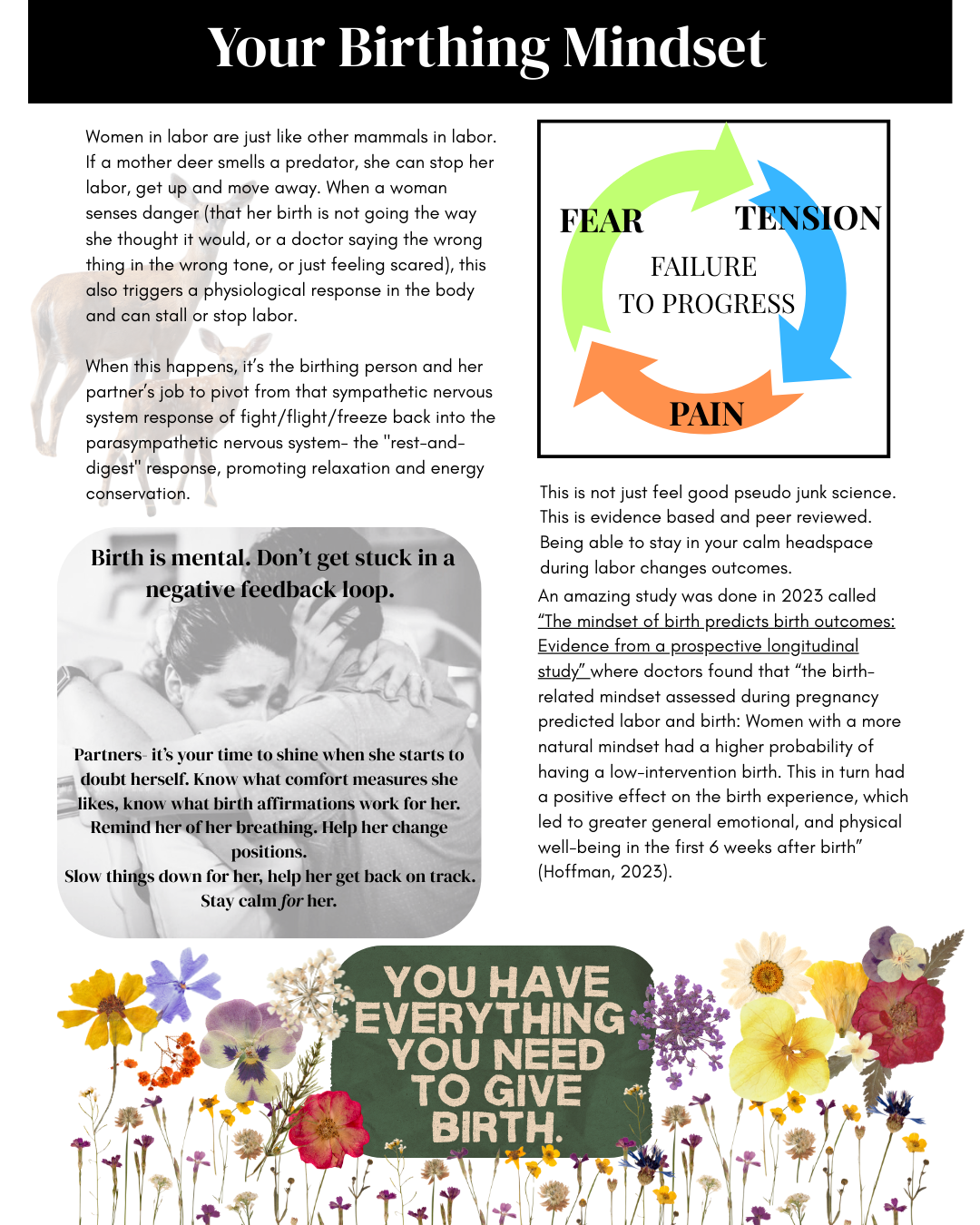
There are videos on social media of traumatic births. Sometimes the algorithm throws these in with the happy ones. You shouldn’t go into your birth thinking birth is easy or that those other women just made the wrong choices. You can’t control much about your birth–when it starts, how long it lasts, when to start pushing–but you can control your response to the sensations of labor, you can control how you react to the exhaustion you feel, you can control the ability to slide into comfort while in discomfort. None of what I just described is easy. But, preparing your mind and preparing your body are so crucial to having a birth you love.
And don’t get me wrong, I fully acknowledge you can do everything right and babies still come how they want to come, and you could have a birth that is not what you wanted. However, my role in a birthing room where the couple wanted to do everything to avoid a csection is to ensure we literally have maxed out every other possibility before saying yes (as long as it’s not emergent and as long as the mama is willing to try & has the energy for different positions/breathing exercises/ etc).
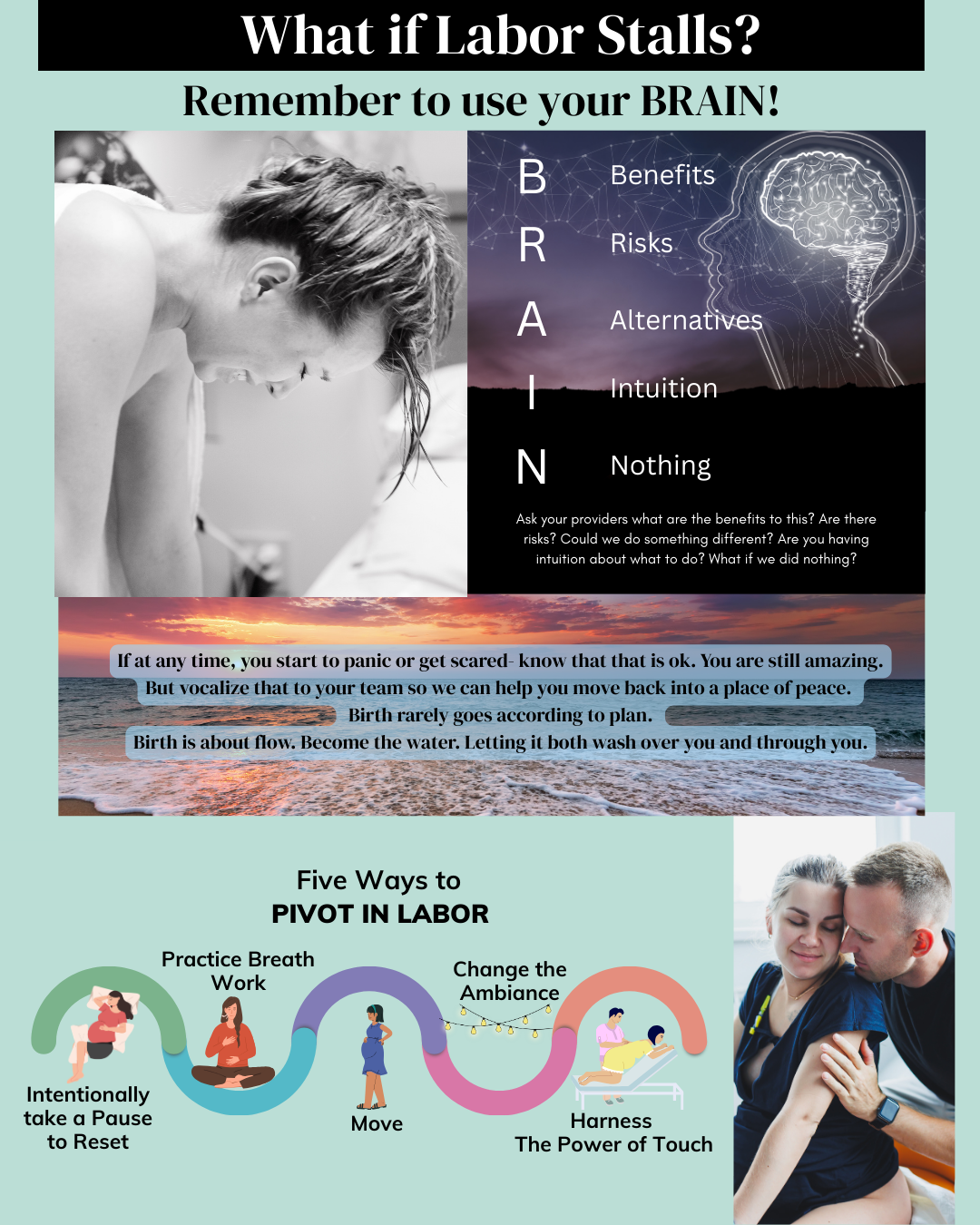
I had a mom hire me recently for a VBAC. She pushed for three hours with her first birth before the doctor told her she didn’t have a pelvis big enough for her baby to come down (something you cannot tell from that amount of pushing). Her birth team didn’t have her change positions once during those three hours. She pushed on her back and then had to have the csection.
This angers me to no end that the nurses failed her, the OB failed her, the system itself set her up for failure. You move baby down by moving mom and it’s outrageous they did this highly invasive major abdominal surgery without helping her change positions. Maybe she would have still needed it (although, baby number two would prove something about her ‘too small’ pelvis).
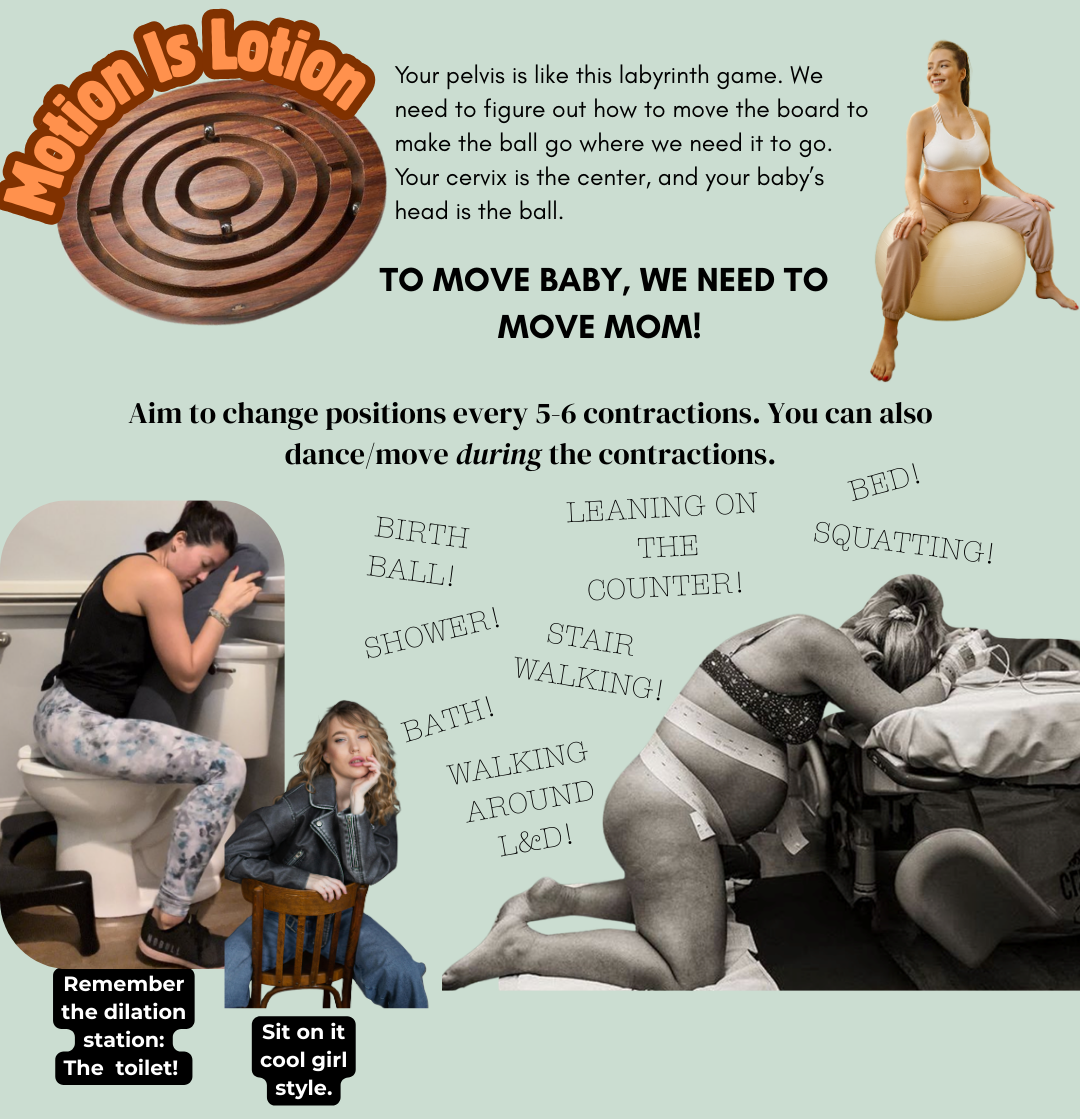
When her body did everything right again for the second birth and it was time to push, as her doula, I helped her change position every 3-5 contractions. She pushed her baby Earthside after 45 minutes and had her successful VBAC, making her feel so vindicated and empowered.
There are a number of instagram influencers who are doulas or midwives or labor nurses offering byte sized pieces of advice (I do it too, so it’s not even a criticism, just a reality of how these sites work). Some of these are great; some have their own skewed perspective. You have to use your own sense of what you’re comfortable with. Trust, but verify.
Taking Birth Classes
The biggest criticism I see about hospital classes is that they teach you how to be a good patient, not necessarily how to advocate for yourself in the hospital setting. However, they are often very affordable. The difference in cost between a hospital class vs one taught by someone not hired by the hospital is, in my opinion, worth it. When I was pregnant with my first, I took a HypnoBirthing course taught by a 30 year veteran L&D nurse who was also a doula. That class had an incredible impact on both my births and on my career as a doula (later choosing to become a certified HypnoBirthing instructor myself).
HypnoBirthing is a 12.5 hours of instruction in person (as well as a textbook, handouts, official HypnoBirthing tracks, and much more in-class practice with breathing techniques, comfort measures, etc), which is typically longer than hospital classes. It also covers a different depth and breadth of topics. And I’m not trying to sell HypnoBirthing to you–it’s just what worked best for me.
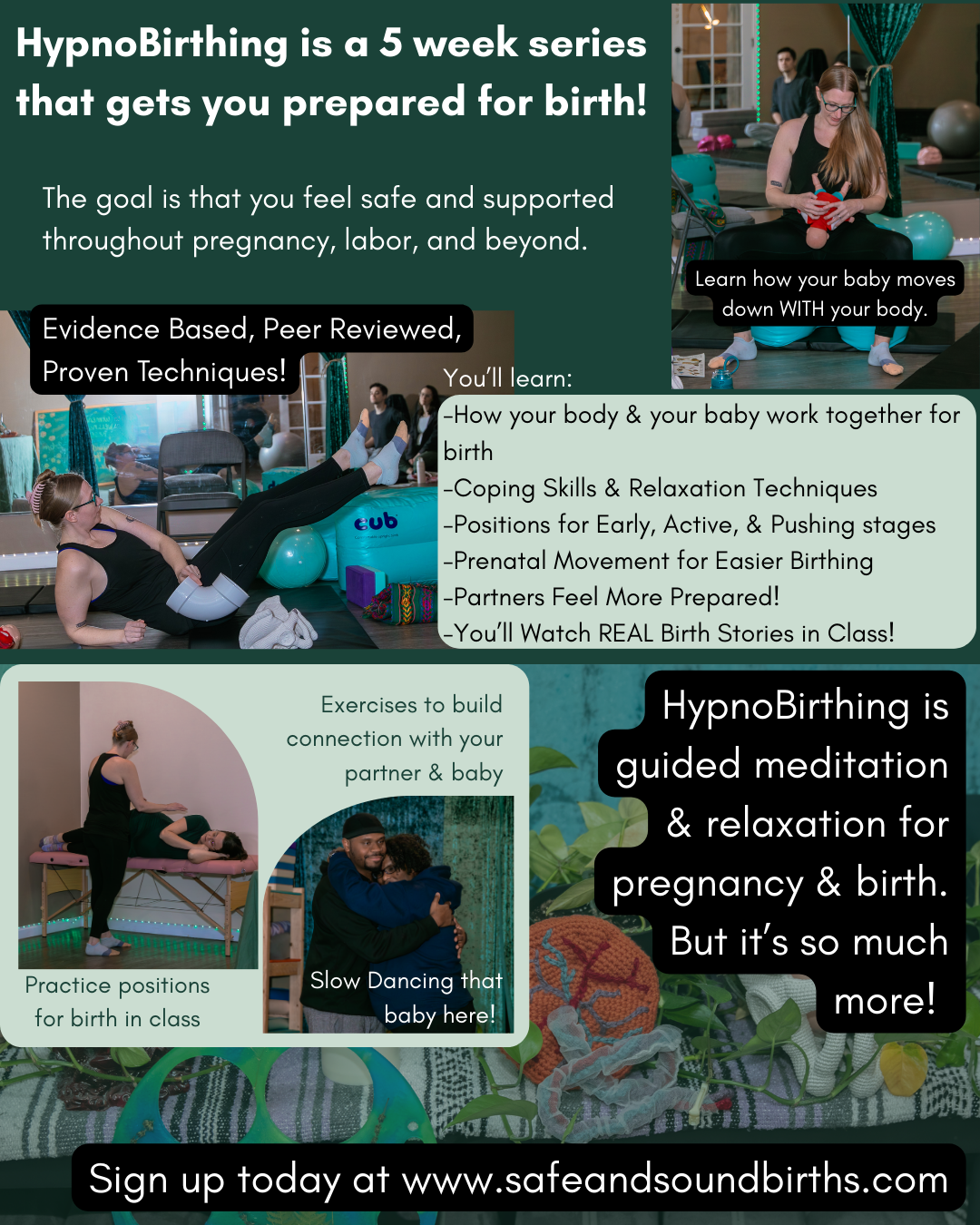
I wasn’t even necessarily anxious about birth (though it is great for people that are), but I knew I wanted a more natural approach to birth, and with having always liked yoga and guided meditation, it seemed right up my alley. It’s important you find a course that best fits you and your partner’s wants and needs. For more birth class options, please see: Finding the Right Birth Class In Anne Arundel county for You & How HypnoBirthing Is My Jam
Find A Doula You Trust
This isn’t to sell you my doula services, but rather, to state the fact that no matter how prepared you both are, when you’re in labor, a lot of that spills out of your head. The person in labor is often referred to as being ‘in labor land’ like la la land (not in their normal brain). This is because labor is felt inside of you and often causes you to ‘go inside yourself’--eyes closed, deeply concentrating, breathing, moving by instinct. It’s hard to think and have executive function in labor. Which is why I tell every partner not to ask ‘are you thirsty, do you want apple juice or water or something else,’ but to just offer the straw to her water right by her mouth and say water’s right here. Take that executive function off her plate.
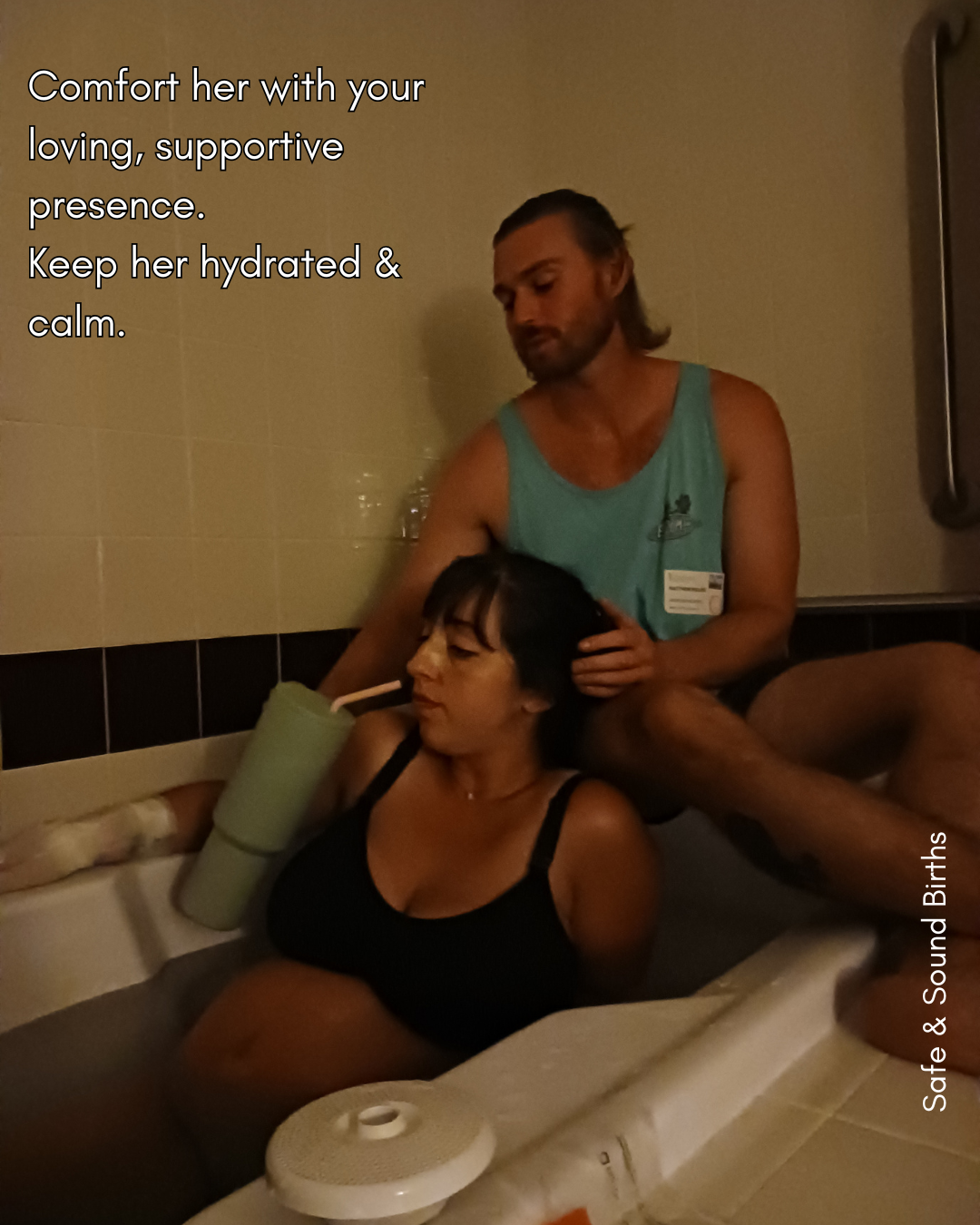
You can feel fully prepared, but there is no way to truly anticipate how labor will unfold. A good doula will know what positions to try, when. A good doula will ensure you have the barf bag by you, she’ll get the next round of pads for your bed ready, she’ll make sure you’re eating and drinking as needed. A good doula will make sure your partner sits once in a while, that your partner eats and drinks (partners are often so focused on the mom that they forget to take care of themselves). These aren’t instinctual things parents often know how to do in labor. Especially with positioning–I give every client a guide to this prenatally, but I don’t expect anyone to memorize any of that. I’m the one in the room with that expertise and it’s my job to try things with you to help bring your baby here.
One of the biggest mistakes first time parents make is just thinking ‘I’ll just show up to the hospital and have a baby.’ What I hear most often from the second time moms who hire me is “I just didn’t know better.” Which, it is not their fault their birth was taken out of their hands and at the mercy of the medical system.
Hospitals love to have inductions on the schedule because it helps the hospital with staffing; it helps them plan better. Sometimes it’s the safest thing for you and your baby, and I’m grateful to OBs who can do c-sections flawlessly when it’s needed.
But you are not just another cog that needs to fit into their industrial birth factory wheel. You are an individual and have your own risks or not. And you don’t have to follow their factor default settings.
If your goal is a vaginal birth, you should definitely have someone in the room with you to help guide you along the way that is not employed by the hospital, that has expertise in this area, and who can help keep you both calm.
Why can’t my partner be my doula?
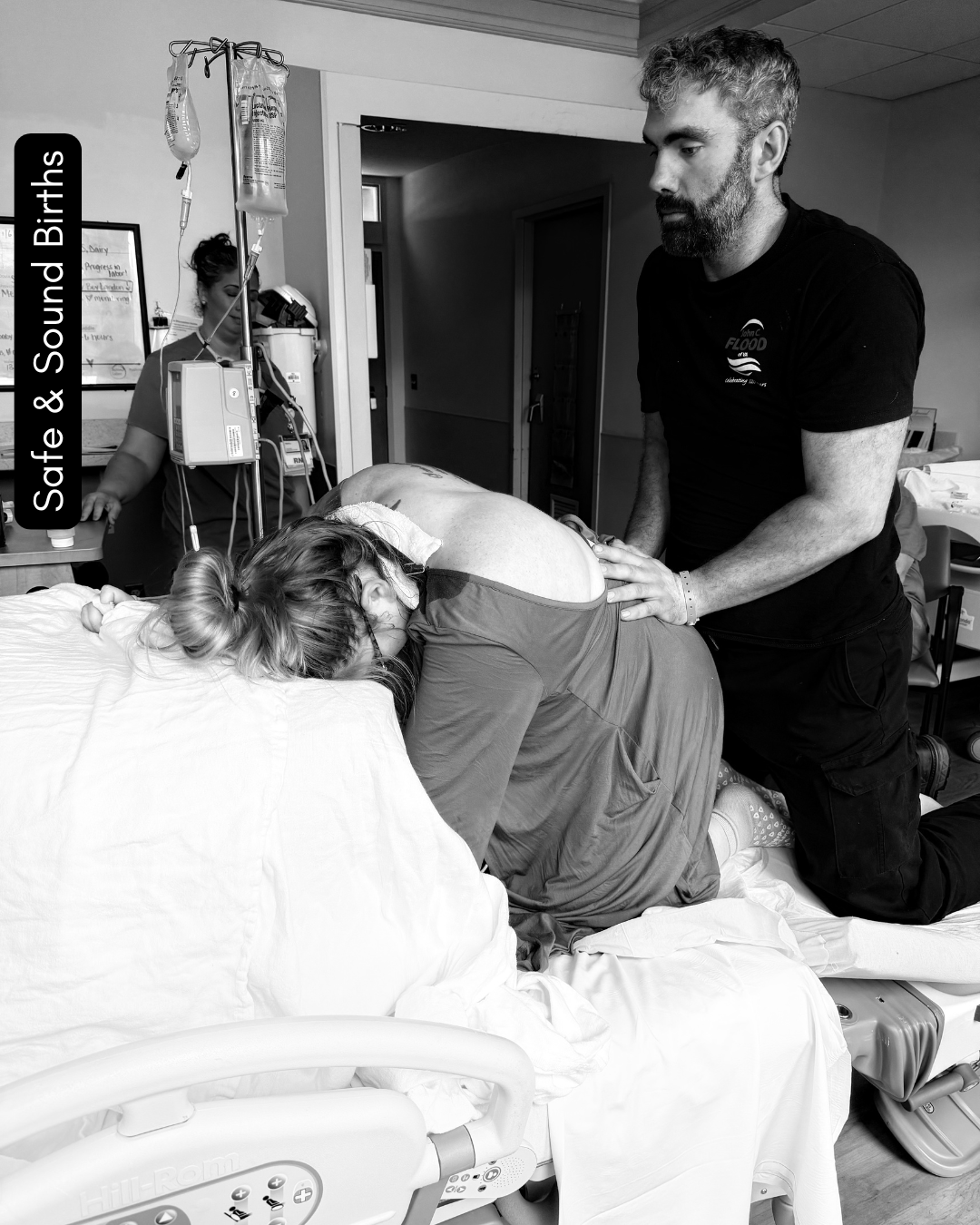
Partners are such an important part of each birth story. I love it when partners want to be more involved and see everything unfolding. As the partner, you can read every book (The Birth Partner by Penny Simkin is amazing) and prep for everything like a boss. But when it’s your person you love the most in the world going through a trying situation, a lot of that stuff tends to spill out of your head.
It’s like trying to plan a vacation to Italy- you can read everything about the place and do your research. But there is no comparing the kind of tour you’d get from an authentic Italian man in the countryside who invites you home to Mama Mia’s house for some home cooking and dinner alfresco under those Italian stars.
Let me be your Giovanni, girl.
Your partner can’t be an authentic Italian in Italy—birth is my home and I would love to be your tour guide. But really, a good doula will help your partner help you! I tell people I’m 50% the birthing person’s doula, but I’m also 50% the partner’s doula. You don’t have to figure everything out on your own, especially in the moment.
With every birth package, I include two Ebooks I’ve written that are guides to birth–one for the birthing person and one for the partner. It is the culmination of the last decade of birth work and what I think all parents should know before labor. In our prenatals, we work to figure out what you are and aren’t comfortable with and go over your options before you’re in labor so you really have time to think about it.
There is no one size fits all approach–I cater my care to the needs of the couple, while also bringing all my birthing knowledge to the room and/or your prenatal/postpartum time.
A good doula will do all of that for you. And I have been called an angel for the care I’ve been able to provide–a compliment which will stay with me always.
If you have a doula throughout your pregnancy, she is also there to provide support and resources. I’ve been lucky enough to amass a list of different providers that I know and trust over the years–lactation consultants, pelvic floor physical therapists, acupuncturists, etc.
I had one mom call me from the parking lot of her OB’s office. She was crying because she was 40 weeks pregnant with her second and the OB checked her cervix telling her that she was “in it for the long haul and we better get you on the schedule for an induction next week.” I told this sobbing mom, who was so ready to meet her baby and dearly wanted to avoid medical intervention, that the state of her cervix had nothing to do with when she was going to meet her baby. Those checks do not mean anything clinically (see: Evidence Based Birth’s article on Cervical Checks). That she should just ignore what was said and release and relax as much as she can.
I helped this mom find her calm and she took a walk with her husband. I told her that exam doesn’t mean a thing and that she could have her baby tomorrow.
I kid you not–around 10:30 that night, I met them at the hospital and she had that baby within a few hours. “In it for the long haul-” Right. This is why routine induction gets me so mad. Another client of mine was taking HypnoBirthing classes and planning on going unmedicated, which her provider knew. But she was running up against her 41 week limit that she felt comfortable with and decided to go into the hospital to be induced. At the hospital, after this mom got checked in and changed into her gown, this particular doctor told her she would only induce her with pitocin, or she should go home.
What my client knew (from class and from our prenatals) is that pitocin works very effectively at bringing on strong contractions, but it’s more difficult to go unmedicated with pitocin induced contractions. She knew that wasn’t the only way to induce (there are medications to ripen the cervix and there is even an option, albeit it’s not everyone’s favorite, to manually open the cervix with a balloon).
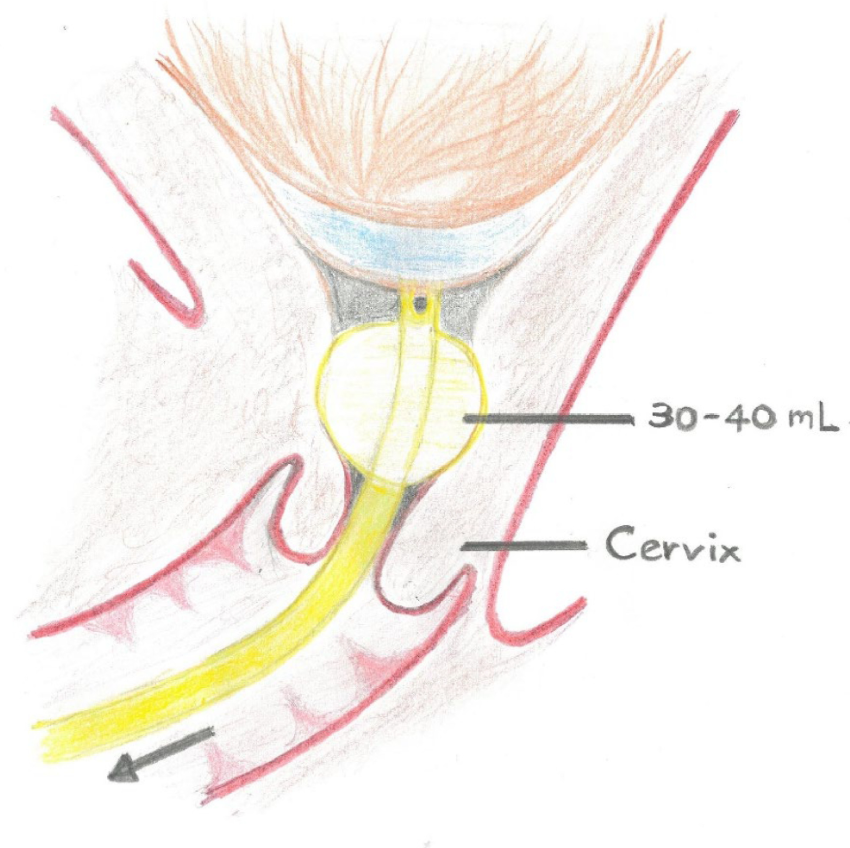
Image: Science Direct
Imagine being given that choice–either do it my way, or get out.
This strong ass woman told her doctor that she was going home. She got dressed and her lovely husband repacked the bags and took them back into the car.
She went home and ate, slept, rested, and tried some at home induction techniques. And I again am not joking when I say, she went into labor on her own later that night. This amazing mom achieved the birth she was hoping so hard for–she was an unmedicated lioness roaring her baby forth. If she had stayed and agreed to the pitocin, her birth wouldn’t have been any more “safe” for her or her baby. It just would have been different–and harder to have the birth she envisioned. Once pitocin comes into the picture, they will tell you to be on a clear fluids diet, you cannot shower, you will have constant fetal monitoring. Did the OB mention any of those things to this mom when she was making her “informed consent” decision? NO. But my client knew these things because we went over them.
Even if that mom had needed eventually to be induced to start labor, it’s not that the medicine is wrong or bad. It’s the lack of options. It’s the lack of care on the provider’s part when she knew an unmedicated birth was important to this mom.
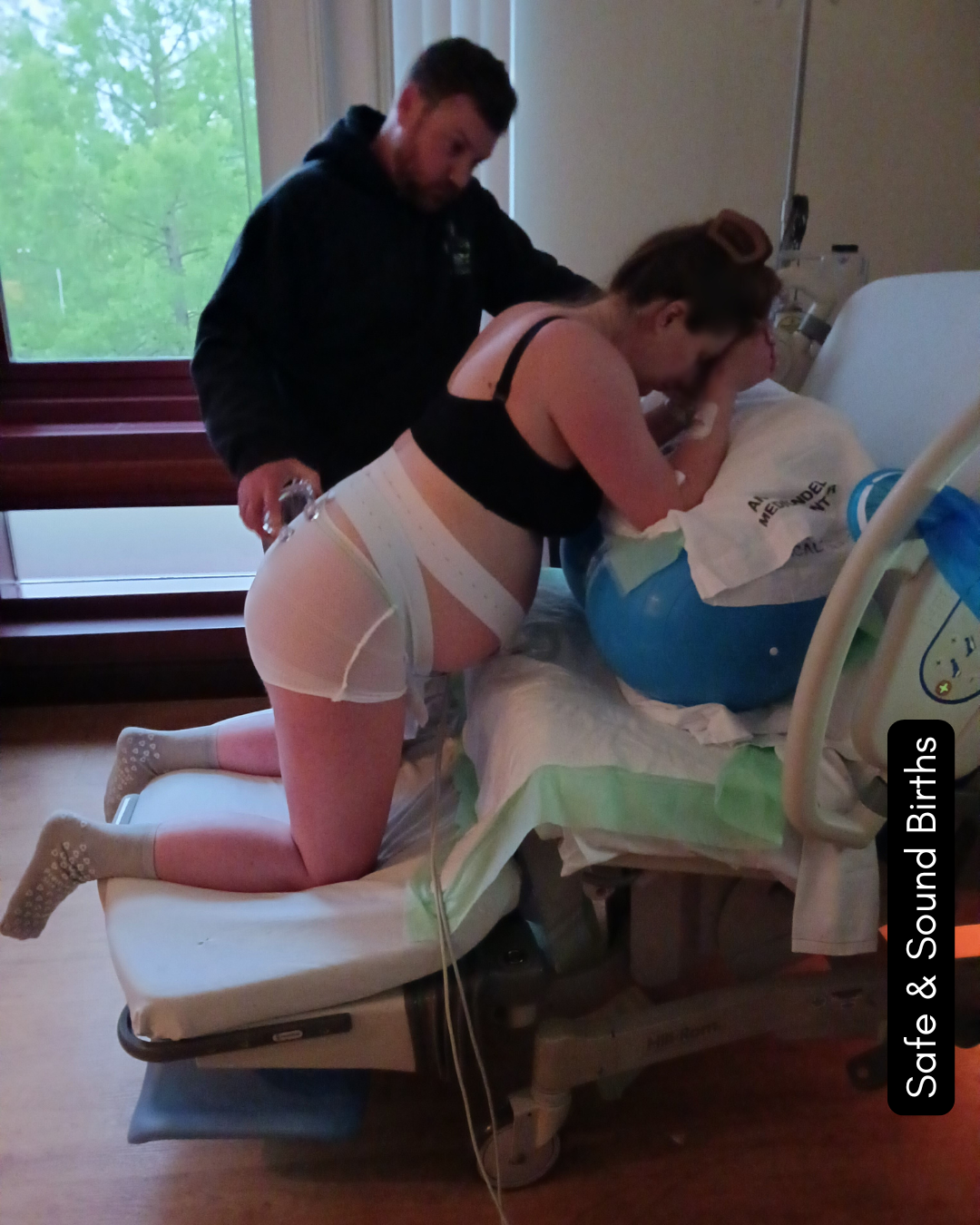
Having a good knowledge of what you’re getting into prenatally is so important, but so is having hands-on support in the room when you’re on your journey through the labyrinth of labor.
I hope this was helpful and should be a good starting point. If you’re interested in birth support, please reach out to me. I also offer to sell the ebooks to individuals if you aren’t ready to commit or not feeling in need of birth doula support.
Stay tuned for a follow up blog about my top favorite pregnancy & birth prep books to read!